
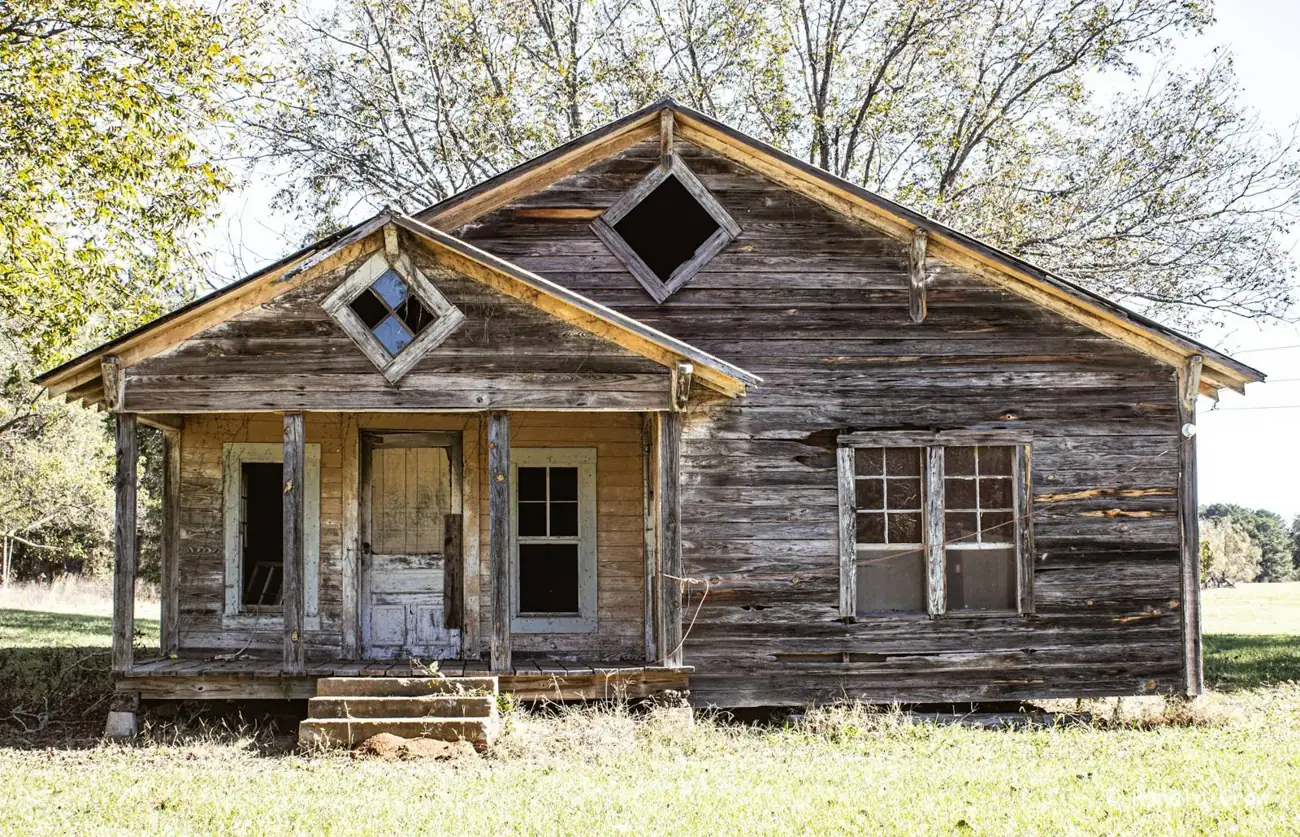
Can you just walk away from land in Texas?
No. Under Texas law, title to land can't be lost by abandonment. You can leave it alone for decades and it's still yours, along with the tax bill. It leaves your hands through a deed to someone who accepts it, or in ways you don't control, such as adverse possession by someone else or a forced sale for unpaid taxes or association dues.
Letting the taxes go doesn't end your responsibility either:
- You're personally liable. Tax Code Section 32.07 makes whoever owned the land on January 1 personally responsible for that year's taxes, and selling or losing the land later doesn't change that.
- A tax suit can target you as well as the land. Under Tax Code Section 33.43, the taxing units can ask the court both to foreclose their lien and for a personal judgment against the owner for years they owned it.
- A tax sale may not clear the debt. If nobody bids enough at the sale, the land is bid off to the taxing unit. Section 34.01 still lets the taxing units collect whatever the former owner owes in other ways.
Penalties, interest and legal fees pile up along the way. Our guide to selling land with back taxes in Texas shows how fast. Walking away is usually the most expensive way out.
Will the county take it?
Only if it wants it. Local Government Code Section 81.032 says a commissioners court may accept a gift of property on behalf of the county to carry out a county function. Nothing requires it to. A small vacant lot with no public use costs the county money to look after, so many counties decline.
It can still be worth a phone call if your land sits next to a county road, park, drainage project or other public land. The same goes for a city, a school district or a water district nearby. If there's a genuine public use, they may take it or even pay for it.
Selling land in a flood zone
Start by looking up your land on FEMA's Flood Map Service Center, which lets you search flood maps by address. FEMA treats any area with a 1% or higher chance of flooding each year as high risk. Those Special Flood Hazard Areas carry real limits:
- Buyers using a federally backed loan must carry flood insurance on any building in the zone.
- Building usually needs a floodplain development permit from the county or city, and the lowest floor has to be at or above the required elevation.
- Under the TREC Unimproved Property Contract, the seller discloses any known flooding and whether the land is wholly or partly in a floodplain, and a buyer can object if part of the land is in a Zone A or V flood area.
A floodplain lot still has buyers. Neighbors often want the extra ground. People looking for pasture, hunting or recreation care less about building limits. If only part of your tract is in the zone, show buyers where the high ground is.
If land on naturally high ground has been mapped into the flood zone, FEMA can issue a Letter of Map Amendment for that parcel or structure, stating that it wouldn't be flooded by the base flood. That can help with both buyers and lenders.

Land that won't perc
In Texas, whether land can take a septic system comes down to a site evaluation. The Texas Commission on Environmental Quality (TCEQ) requires a licensed site evaluator or professional engineer to survey the lot and analyze the soil where the system would go. Permits usually come from a local authority, often the county, and local rules can be stricter than the state's.
A poor result doesn't always mean no house. When the soil rules out a conventional septic tank and drainfield, TCEQ's rules allow other designs, such as an aerobic treatment unit with spray or drip disposal. They're more complex, need more maintenance and usually cost more, and that cost comes off what a buyer will pay.
Lot size matters too. Under 30 Texas Administrative Code Section 285.4, subdivisions created under the current rules need lots of at least half an acre with public water, or one acre with a private well, to use individual septic systems. Smaller lots subdivided before January 1, 1988 can still be approved in some cases. A single-family home on 10 acres or more can be exempt from the permit itself if it meets all of TCEQ's other conditions.
If your land is hard to build on, get a site evaluation before you sell. A buyer who knows exactly what system the land needs can price it. A buyer facing an unknown usually offers less or walks away.
Lots with POA dues and deed restrictions
Many small Texas lots sit in subdivisions with a mandatory property owners' association. Its assessments come with ownership, whether or not you ever use the lot, and unpaid assessments usually become a lien on it. Under Property Code Chapter 209, an association in a residential subdivision generally needs a court order before it can foreclose that lien, and it can't foreclose when the debt is only fines and related attorney fees.
When you sell, Property Code Chapter 207 requires the association to deliver the subdivision's restrictions, its bylaws and rules, and a resale certificate within 10 business days of a written request. The certificate shows the regular assessments, any special assessments, and anything owed on your lot. The title company usually orders it, and any unpaid dues come out of your sale money at closing.
Deed restrictions can matter as much as the dues. They may limit what can be built, set minimum house sizes or rule out manufactured homes. Read them before you price the lot, because they decide who can use it.
Lots in subdivisions that never got finished roads or utilities are among the hardest to sell. Your best buyers are usually other owners in the same subdivision, especially next door. It's also worth asking the association whether it knows an owner who wants another lot.
Your options, side by side
| Option | Works well when | Watch out for |
|---|---|---|
| Sell to a neighbor | The land is worth more to them than to anyone else | Put it in a written contract and close through a title company |
| List with a land agent | The land has a market at the right price | Commission, and a longer wait if the price is too high |
| Sell it yourself | You can handle pricing, marketing and paperwork | Getting the contract and required notices right |
| Donate it | A land trust or charity wants it | They can say no, and deduction rules are strict |
| Sell to a land company | You want it handled simply, or the land is far away | Compare the offer with market value first |
| Stop paying and let it go | Almost never | Personal liability for taxes, plus penalties and legal fees |
Donating land: when it works
Land trusts usually look for land with real conservation value, such as habitat, water or open space next to protected land. Some charities accept land they can sell to fund their work. Either may decline a small lot with dues, flooding or no access. Ask before you do anything.
If a qualified organization accepts, you may get a federal tax deduction. IRS Publication 526 sets the basic rules:
- You generally have to itemize deductions to claim it.
- For land held more than a year, the deduction is generally its fair market value, usually limited to 30% of your adjusted gross income, with any excess carried forward for up to 5 years.
- A deduction over $5,000 needs a qualified appraisal from a qualified appraiser and Form 8283, Section B. IRS Publication 561 explains how donated property is valued.
- From 2026, itemizers can deduct gifts only to the extent they exceed 0.5% of adjusted gross income, and the new deduction for people who don't itemize covers only cash gifts.
An unbuildable lot may appraise for less than you hope, and the appraisal costs money. Run the numbers with a tax professional before you rely on a deduction.
Pricing unwanted land so it actually sells
Most unwanted land is sellable at the right price. The mistake is pricing a floodplain lot or a lot that won't perc like a buildable one, then waiting while taxes and dues keep coming. Compare it with sales of land that has the same problem. Our guide to what your land is worth in Texas explains how to find real sales.
Gather what a buyer will ask for: the latest tax statement, the plat or survey, the flood map, any site evaluation, the deed restrictions and a POA resale certificate. If you inherited the land and it's still in a relative's name, sort out the title first with our guide to selling inherited land in Texas. If the land has other legal problems, such as a boundary dispute or a tax suit already filed, talk to a Texas real estate attorney.
A land company like ours is one more option. Tell us about your land, and we'll research it, including the flood map and any dues, and talk through your choices within 24 hours, with no obligation.
Common questions
Can I just abandon land in Texas?
No. In Texas, title to land can't be lost by abandonment. If you stop paying the taxes, you stay personally liable for each year you owned the land on January 1, and the taxing units can sue both to foreclose their lien and to collect from you personally. Even after a tax sale, they can keep collecting any amount you still owe.
Can I give my land to the county?
Only if the county agrees. A commissioners court may accept donated property to carry out a county function, but it doesn't have to. Most counties have little use for a small vacant lot.
How do I sell a lot in a flood zone?
Check the FEMA flood map, disclose what you know, and price the land against other floodplain sales. Neighbors, recreational buyers and people who want pasture or hunting land care less about building limits. If part of the lot sits on naturally high ground, a Letter of Map Amendment from FEMA may help.
What is land worth if it won't perc?
Less than a similar buildable lot, but usually more than nothing. In Texas, soil that rules out a conventional septic system can often still take an engineered system, such as an aerobic unit with spray or drip disposal, at a higher cost. The price has to reflect that cost, or appeal to buyers who don't plan to build.
Do I still owe POA dues if I never use my lot?
Usually yes. Assessments in a mandatory property owners' association come with ownership, whether or not you use the lot, and unpaid assessments typically become a lien on it. An association generally needs a court order to foreclose that lien. Selling the lot is the cleanest way to stop the dues.
This guide is general information for Texas landowners, not legal, tax or financial advice. Laws and local rules change, so check your situation with a Texas real estate attorney or tax professional before you act.
Sources
- Texas Tax Code, Chapter 32: tax liens and personal liability (Section 32.07)
- Texas Tax Code, Chapter 34: tax sales, including property bid off to a taxing unit (Section 34.01)
- Texas Property Code, Chapter 207: resale certificates from property owners' associations
- Texas Property Code, Chapter 209: POA assessment liens and foreclosure
- Texas Local Government Code, Section 81.032: county acceptance of donations
- TCEQ: getting a permit for an on-site sewage facility (septic system)
- FEMA: flood maps and the Flood Map Service Center
- IRS Publication 526: charitable contributions
- Texas A&M Real Estate Research Center: abandonment of property