
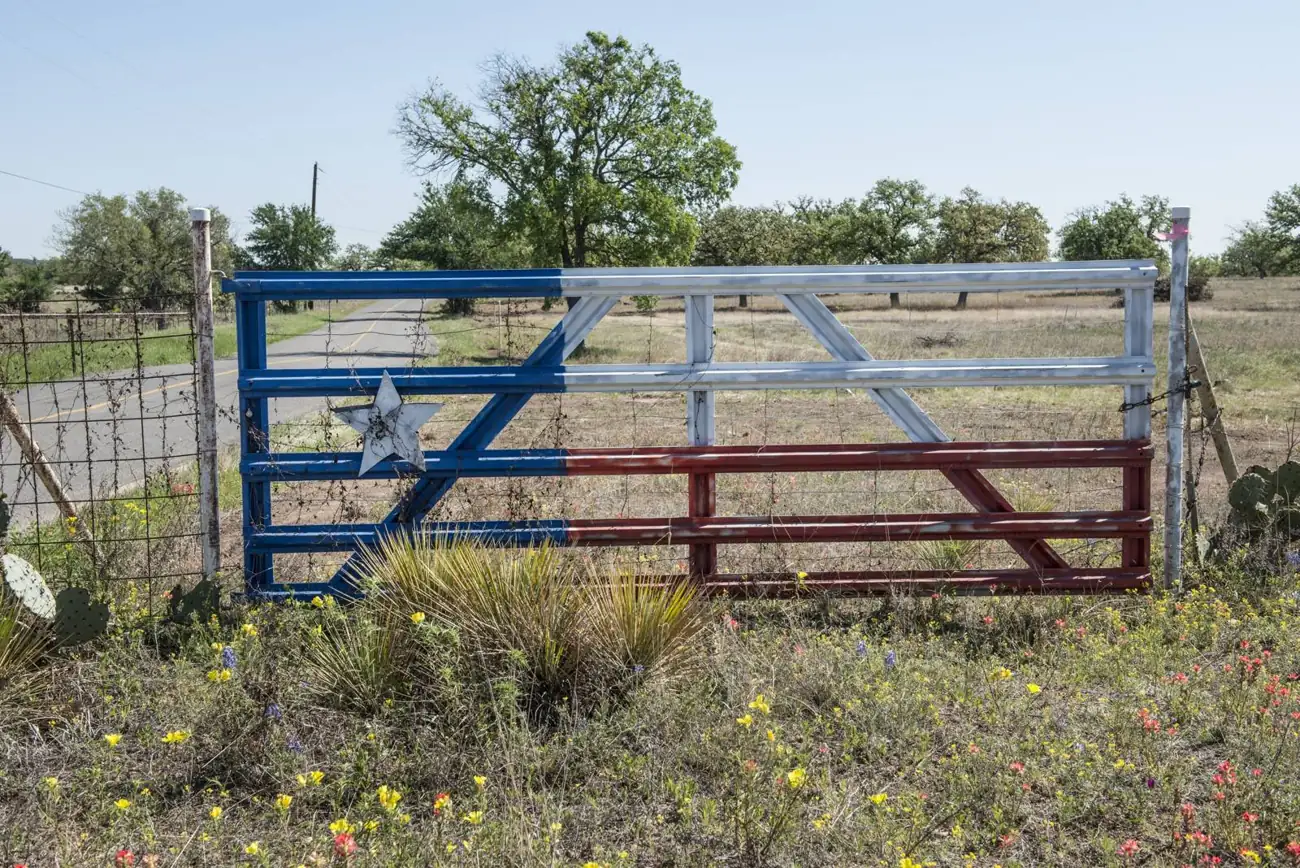
Is your land actually landlocked?
Physical access and legal access are different things. You may be able to drive to the land today along a neighbor's track, but unless you have a legal right to use that route, a buyer and title company will treat the land as landlocked. You can check in about ten minutes:
- Look at the plat or survey. Does any boundary touch a public road?
- Search the county deed records for a recorded easement across a neighbor's land to your tract. Your own deed may mention one.
- Check an old title policy or commitment, if you have one, for any access easement it lists.
- Ask about any written agreement with the neighbors. An unwritten "you can use the gate" arrangement isn't legal access and ends when the land changes hands.
If none of those turns up a legal route, your land is landlocked for practical purposes.
Why landlocked land is hard to sell
Title companies are usually unwilling to insure a right of access to land that doesn't have one, and Texas title rules let them take access out of the owner's policy coverage. Lenders require title insurance, so a buyer who needs a loan usually can't buy landlocked land. That leaves cash buyers and neighbors, and fewer buyers means a lower price.
The same problem affects you as the owner. You usually can't borrow against landlocked land, and building on it is difficult without dependable access for construction, utilities and emergency services.
Five ways to get legal access in Texas
| Route | What it takes | Realistic? |
|---|---|---|
| Buy an easement | A neighbor agrees, usually for payment, and you record a written easement | The most common and quickest fix |
| Easement by necessity | Your land and the neighbor's were once one tract, and access was necessary when it was split and still is | Only if the history fits. Needs a court case |
| Prescriptive easement | 10+ years of open, adverse, continuous, exclusive use | Hard to prove. Courts are skeptical |
| Easement by estoppel | A neighbor promised access and you relied on that promise | Fact-specific. Needs a court case |
| Neighborhood road | An application to the county commissioners court | Possible, but at the county's discretion |
1. Buy or negotiate an easement
This is usually the best route. Agree on a price and a route with a neighbor, then have an attorney prepare a written easement that describes the land, the route, and any limits such as width or permitted uses. Record it in the county deed records. An unrecorded easement is hard to enforce against a later owner who buys without knowing about it. Paying a fair price to a neighbor almost always costs less than a lawsuit.
2. Easement by necessity
In Hamrick v. Ward (2014), the Texas Supreme Court confirmed what this requires. The two tracts must once have been owned together. Access through the other tract must be truly necessary, not just convenient. And the necessity must have existed when the tracts were split, and still exist now. The easement ends when the necessity does.
The history is where these claims usually fail. In a 2016 case, the claim failed because nobody could show the route would have reached a public road when the land was divided in 1886.
3. Prescriptive easement
If you, and possibly earlier owners, used a route openly, continuously and without permission for at least 10 years, you may have a prescriptive easement. Texas courts set a high bar. Any permission from the landowner defeats the claim, and so does the landowner using the same road, because the use has to be exclusive.
4. Easement by estoppel
If a neighbor clearly represented that you had access, and you relied on that promise, for example by buying the land or building on it, a court may hold them to it. These cases turn on their specific facts.
5. A neighborhood road through the county
Texas Transportation Code Section 251.053 lets an owner with no public access file a sworn application with the county commissioners court. If the court finds you have no access, it may declare a public road across neighboring land. A jury decides what the affected neighbors are paid. The county sets the road up initially but doesn't have to maintain it. The decision is at the court's discretion, and Texas A&M's agricultural law experts note that the statute has never been tested in court, after a similar older law was struck down in 1964.

The "you can't be landlocked in Texas" myth
You'll hear that Texas law guarantees every property access. It doesn't. There's no automatic right, and a court won't create an easement just because land would be more useful with one. Each route above has conditions you have to meet and prove.
One narrow exception: when land is divided in a partition lawsuit, the court-appointed commissioners must give any tract that would be cut off an access easement.
Selling without fixing the access
Fixing access isn't always worth the time or cost. You can still sell:
- To a neighbor. An adjoining owner can reach your land from their own, so the access problem doesn't affect them. They often value it most.
- To a cash buyer or land company that's comfortable with the access situation and will price it in.
- To a recreational buyer, such as a hunter, who has access arranged through a neighbor.
Whoever buys, be clear in the listing and the contract that the land has no legal access. It avoids disputes later, and the buyer's title company will find it anyway.
What landlocked land is worth
There's no reliable statewide figure for how much lack of access cuts value. It depends on how easily access could be fixed, what the land is used for, and who the likely buyers are. A tract where a neighbor would sell an easement for a modest price is worth much more than one where access looks impossible. Before setting a price, find out what an easement would cost, because a buyer will ask the same question.
If you own landlocked land in Texas and aren't sure where to start, tell us about it. We'll look at the access situation and talk you through the options, including what the land might sell for as it is. For the other costs involved, see what it costs to sell land in Texas.
Common questions
Can you sell land that has no road access in Texas?
Yes. Selling landlocked land is legal. Fewer buyers can purchase it, because lenders and title companies are wary of land without legal access, so most buyers are neighbors or cash buyers. Be upfront about the access situation in your listing and contract.
How do I get an easement to my landlocked property in Texas?
The usual way is to negotiate with a neighbor, pay for a written easement that describes the route, and record it in the county deed records. If that fails, you may have a claim for an easement by necessity or a prescriptive easement, or you can apply to the commissioners court for a neighborhood road. Those routes are slower and less certain, so talk to a Texas real estate attorney first.
How long does it take to get a prescriptive easement in Texas?
The use has to be open, adverse, continuous and exclusive for at least 10 years, and then proven in court. It's hard to win. Any permission from the landowner defeats it, and so does the landowner using the same road.
Is landlocked land worth less?
Usually, yes, because fewer buyers can purchase it and they have to price in the cost and uncertainty of getting access. There's no reliable statewide figure for the discount. A neighbor who can reach the land from their own property often values it most.
Doesn't Texas law guarantee access to every property?
No. That's a common belief, but there's no automatic right. You have to establish access through an agreement, a court ruling, or the county process described above.
This guide is general information for Texas landowners, not legal, tax or financial advice. Laws and local rules change, so check your situation with a Texas real estate attorney or tax professional before you act.
Sources
- Texas A&M AgriLife Extension: Landlocked Property Law in Texas (2025)
- Hamrick v. Ward, Texas Supreme Court (2014): easement by necessity
- Texas Transportation Code, Section 251.053: neighborhood roads
- Texas Property Code, Section 23.006: access in partition
- Texas Department of Insurance: title procedural rule P-37 (access coverage)