
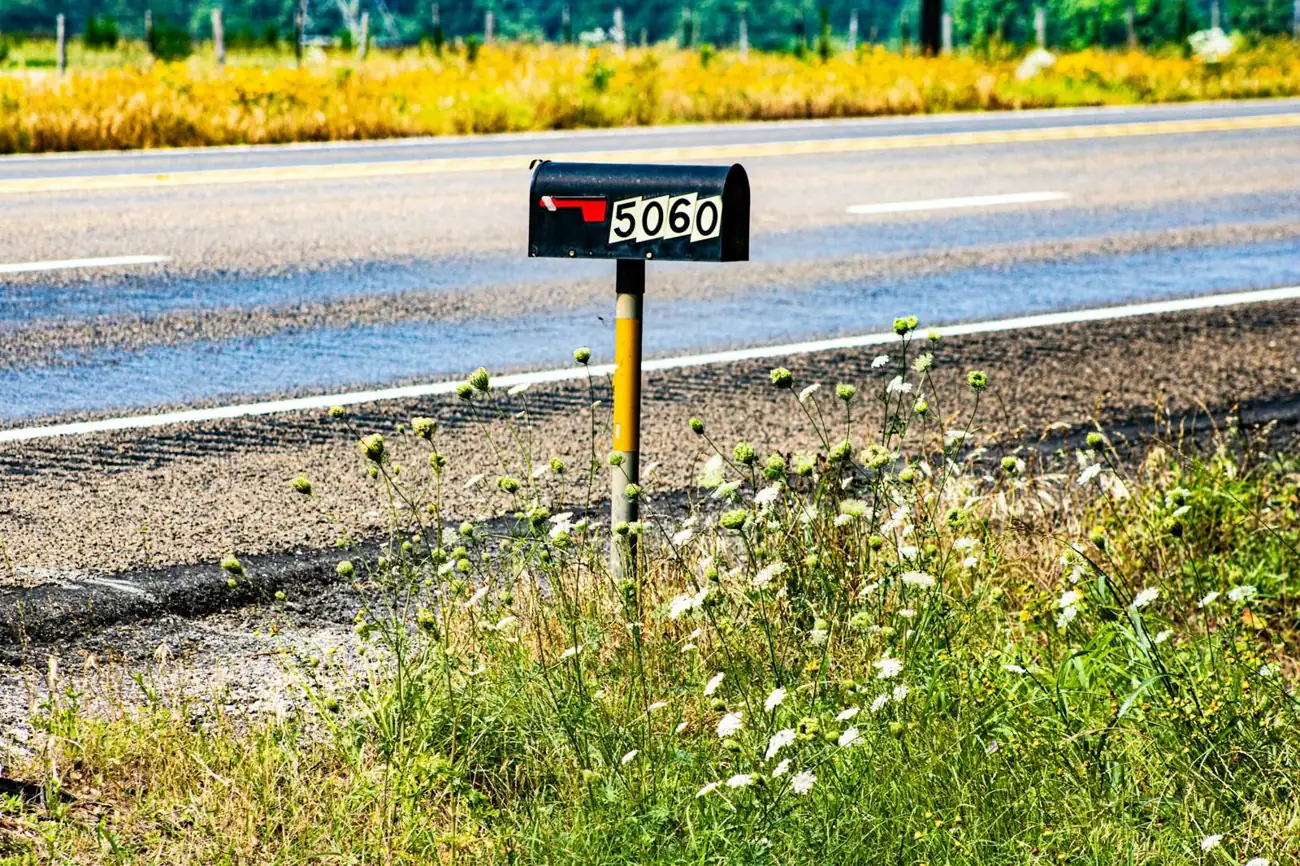
Why you keep getting letters, texts and calls
Texas appraisal districts publish the owner's name, mailing address and basic details for each parcel. Land companies use those records to build lists of owners, then mail, text or call them in bulk. That's why an offer can arrive for land you've never listed, sometimes with your parcel number printed on it.
In fairness, we should say up front that DHM Land Group is a land company too, and companies like ours do contact landowners. That's why we think owners deserve a straight explanation of how these offers work, including what to ask any company that approaches you, us included.
Some letters aren't about the land at all. Mineral buyers mail offers for mineral rights, sometimes with a deed and a payment draft enclosed. Texas Property Code Section 5.151 requires that kind of mailing to carry a notice in large type saying that signing it sells your mineral interest. Read every page before you sign anything that arrives in the mail.
How land companies come up with a number
Most mailed offers are made before anyone has walked the land. The company pulls the size, location and tax value from county records, looks at recent sales or listings of similar tracts, and works back from what it thinks it could resell the land for. Then it subtracts closing costs, holding costs, the cost of reselling and its profit.
That's why many offers come in well below full market value. The buyer is taking on the work and the risk of resale, and pays for that by paying you less. Some companies mail a fixed price. Others give a range and say the final number depends on their research, which means it can drop after you respond.
A lower price isn't automatically a bad deal. Some owners value a simple, certain sale more than the last dollar, especially for inherited land, land far away, or land with back taxes. What matters is that you know what the land would bring on the open market before you decide.
Will they buy it, or assign the contract?
This is the most important question to ask. Some land companies close the purchase themselves. Others sign a contract with you, then look for another buyer and assign the contract to them for a fee. The second buyer closes with you. That practice is often called wholesaling.
Wholesaling is legal in Texas, with disclosure rules that protect you:
- Property Code Section 5.0205. Before someone contracts to assign their interest in your land, they must tell you in writing that they intend to assign it. They must also tell any potential buyer in writing that they're selling only a contract interest and don't hold legal title. This rule was added in 2017 by SB 2212 and moved to its current section, from Section 5.086, by SB 1577 on January 1, 2024.
- Occupations Code Section 1101.0045. A person without a real estate license can assign a purchase contract only if they don't use it to act as a broker and they disclose the nature of their interest in writing to the seller and any potential buyer. If they don't disclose it, the law treats what they're doing as real estate brokerage, which requires a license.
The risk for you is time. If the buyer can't find someone to take the contract, they may cancel during the option period and your land has been off the market for weeks. When the Texas Real Estate Commission surveyed people about wholesaling in 2022, some sellers said they felt misled about the deal or unsure whether the wholesaler was the real buyer, and a few said their sale never closed because no end buyer was found.

Is the offer fair? How to check it against the market
Before you respond, get a sense of what your land would sell for. Our guide to what your land is worth in Texas shows how to find real sales, since Texas doesn't make sale prices public. Then compare what each route would actually leave you with.
An illustration: A company offers $48,000 for a tract, with the buyer paying the closing costs. A local agent thinks it would list for $70,000 and sell in six months. If commission and seller costs come to about $6,000, listing might leave you around $64,000, about $16,000 more, if it sells at that price. If the agent's honest estimate is $52,000, the two come out about even. The comparison depends on the market value, so get that number first.
Then ask the company a few direct questions. A buyer who has done real research will answer them without trouble:
- What is the offer based on, and which sales did you compare it with?
- Will your company close the purchase itself, or do you plan to assign the contract?
- Is the price firm, or can it change after your research or during the option period?
- Which title company will close, and who pays the closing costs?
- How long is the option period, and how much earnest money will you deposit?
Write the answers down, and make sure the contract matches what you were told.
What to check in the contract
Many Texas land sales use the Texas Real Estate Commission's Unimproved Property Contract (form 9-18). Investors often use their own forms. Either way, these terms decide how firm the deal really is:
| Term | What it means | What to look for |
|---|---|---|
| Option period (sometimes called a feasibility or inspection period) | The buyer can cancel for any reason during this window. In the TREC form, the option fee is yours to keep if they cancel. | How many days, and how much the option fee is. A long period with a tiny fee ties up your land for almost nothing. |
| Earnest money | A deposit held by the title company. The TREC form requires it within 3 days after the contract's effective date. | A meaningful amount, deposited with the title company named in the contract. |
| "And/or assigns" after the buyer's name | The buyer can transfer the contract to someone else. | Ask directly whether they intend to assign it. Texas law requires them to tell you in writing if they do. |
| Closing costs | Who pays the owner's title policy, escrow fee, recording and any back taxes. | Each item spelled out in writing, so you can work out your net. |
| Title company | The neutral party that holds the money, clears title and closes the sale. | An established Texas title company. Call it on a number you look up yourself. |
| Closing date | When the sale must close. | A firm date, with no open-ended extensions for the buyer. |
If the contract is long or unusual, have a Texas real estate attorney read it before you sign. A short review costs far less than a bad contract. Our guide to the costs of selling land in Texas explains the closing costs line by line.
Red flags
- Pressure. "This offer expires tomorrow" or repeated calls pushing you to sign today.
- A deed before closing. Anyone who asks you to sign a deed now and get paid later. In a normal sale you sign the deed with the title company, which holds it until the buyer's money is in.
- No title company, or one you can't find or reach independently.
- Fees from you. Asking you to pay an upfront fee to sell your own land.
- Wiring and bank details. Requests to wire money, or emailed changes to where your sale money will go. Confirm any payment instructions by phone with the title company, using a number you found yourself.
- A company you can't identify. Check the business name with the Texas Comptroller's free entity search. If someone says they're a real estate agent, look them up on TREC's license search.
- Vague answers about whether they'll close themselves or assign the contract.
Are land flippers and wholesalers legitimate?
Buying land at a discount and reselling it is an ordinary, legal business. So is assigning a contract in Texas, when the disclosures are made. When Texas codified the rules in 2017, TREC said wholesaling remains legal as long as those truth-in-advertising rules are followed.
Problems start when a buyer hides what they are, rushes an owner, or uses a contract to tie up land it never intends to close on. Those are practices to avoid, and you can avoid them by asking direct questions and reading the contract.
You don't have to answer at all
An offer letter creates no obligation. You can throw it away, ask to be removed from the list, or reply STOP to a text. Whether and when to sell is always your decision.
If you do want to sell, you have several routes: list with a land agent, sell it yourself, or work with a land company. With any company, including ours, you should know who the buyer is, what the price is based on, and which title company will close. You can read how our process works: you tell us about the land, we research it and agree on a price with you, it goes under a standard contract, and a Texas title company closes the sale.
Common questions
Why do I keep getting letters and texts about buying my land?
Your name, mailing address and parcel details are on your county appraisal district's public records, and land companies use them to build mailing and texting lists. Getting an offer doesn't mean anything has changed with your land or that you have to respond.
How can I tell if a land offer is legit or a lowball?
For legitimacy, look the company up with the Texas Comptroller or Secretary of State, ask which title company will handle closing, and call that title company on a number you find yourself. For price, compare the offer with recent sales of similar land nearby. A serious buyer will give you time to do both.
Is land flipping a scam?
Buying land and reselling it is a legal business. Assigning a purchase contract is also legal in Texas if the person discloses in writing that they hold only a contract and don't own the land. Problems come from buyers who hide that, pressure owners, or tie land up in contracts they never close.
How do land investors decide what to offer?
Most start from county records and recent sales or listings of similar land, then subtract what they expect to spend on closing, holding and reselling, plus their profit. Many make offers without seeing the land, so the first number can move once they research it.
Do I have to answer an offer to buy my land?
No. An offer letter creates no obligation. You can ignore it, ask the company to take you off its list, or reply STOP to a text. Whether and when to sell is always your decision.
This guide is general information for Texas landowners, not legal, tax or financial advice. Laws and local rules change, so check your situation with a Texas real estate attorney or tax professional before you act.
Sources
- Texas Property Code, Section 5.0205: equitable interest disclosure (and Section 5.151 on mineral offers)
- Texas Occupations Code, Section 1101.0045: equitable interests in real property
- TREC: sale of equitable interests in real estate clarified (SB 2212)
- TREC: 2023 highlights, including the wholesaling disclosure change
- TREC: results from the Wholesaling in Texas survey
- TREC Unimproved Property Contract (form 9-18)
- Texas Comptroller: franchise tax account status search
- TREC: license holder search